💧 Water damage in Killeen? Free inspection — (254) 781-4486
📚 Restoration Guide
How to Spot Storm & Hail Roof Damage in Central Texas
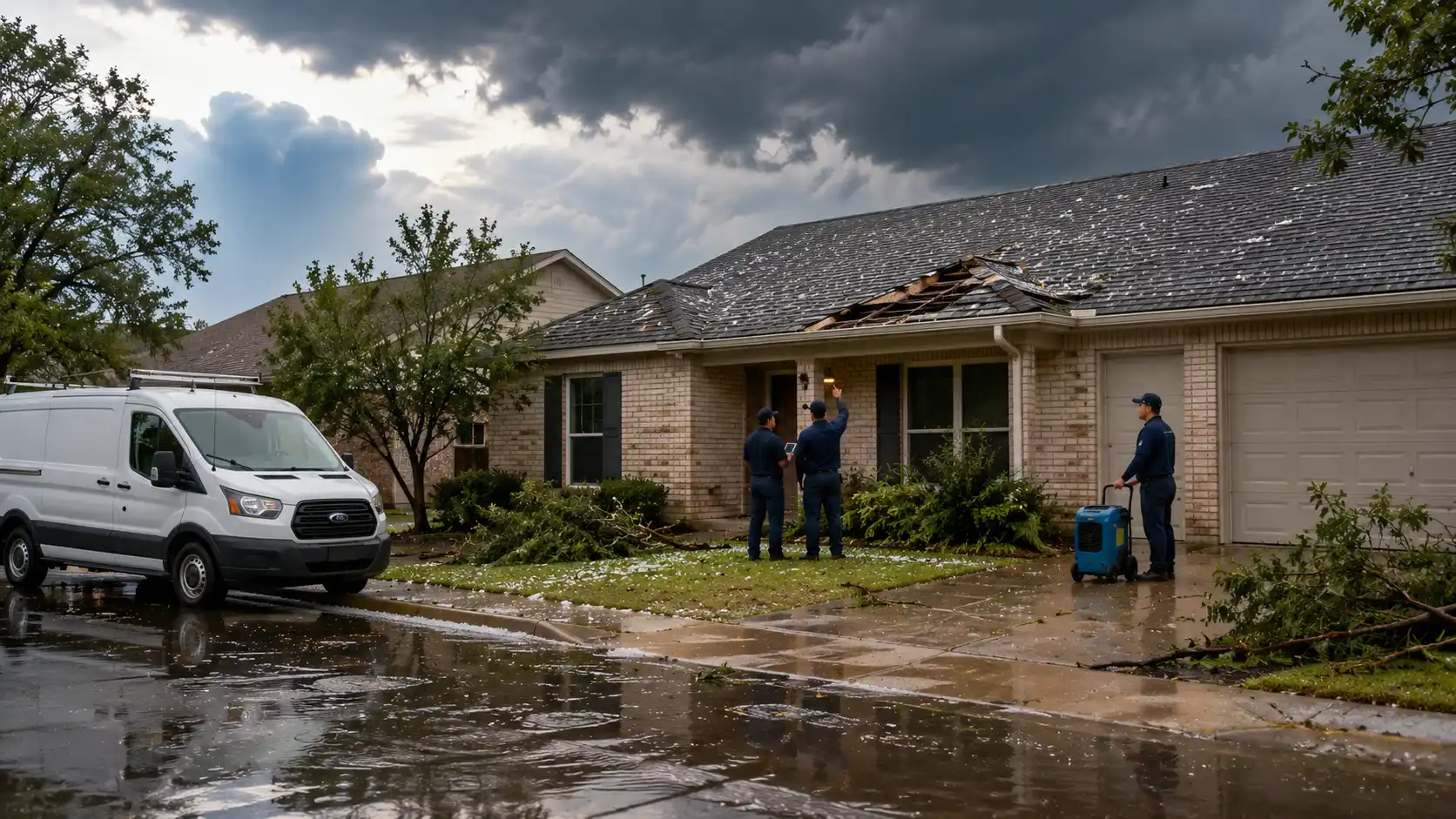
The clearest signs of storm and hail roof damage in Central Texas are dented shingles, granules collecting in gutters, dinged metal vents and flashing, and new water stains on your ceiling. Some hail damage never leaks right away, so a roof can look fine while it slowly fails. When in doubt after a Killeen storm, get a professional inspection before small damage becomes a soaked ceiling.
Killeen sits in the heart of Central Texas hail alley, where warm Gulf moisture collides with dry air from the west. That collision fuels the severe spring storms that pound Bell County roofs most years. If a storm just rolled through Killeen, Harker Heights, or Copperas Cove, this guide shows how to check your roof and what to do next.
Signs of roof damage you can spot from the ground
You do not need to climb up to get a good first read on your roof. Most homeowners in the Killeen area can catch the early warning signs from the yard with a phone camera, ideally the morning after a storm.
Shingle granules piling up at downspouts or gutter corners, looking like coarse black sand.
Shingles that appear pocked, shiny, or scattered with dark spots where granules were knocked off.
Dents on gutters, vent caps, roof flashing, AC condenser fins, and the garage door.
Loose, curled, cracked, or missing shingles, especially along ridges and edges where wind lifts first.
New ceiling stains, bubbling paint, or damp spots on interior walls after the next rain.
Dents on soft metal are a useful proxy. If hail dimpled your gutters or vents, it very likely bruised your shingles too, even if the roof looks intact from below.
Hail damage vs wind damage: how to tell them apart
Storms in Central Texas rarely bring just one type of damage. Still, knowing whether you are looking at hail or wind helps you describe the loss to an inspector. Hail creates random impact marks across the whole roof, while wind is more directional.
Sign
Points to hail
Points to wind
Pattern
Random dents scattered across all slopes
Concentrated on one side facing the storm
Shingles
Round bruises, granule loss, soft spots
Creased, lifted, folded back, or torn away
Metal parts
Dimpled vents, gutters, and flashing
Bent or peeled flashing and drip edge
Debris
Granules washed into gutters
Whole shingles or tabs on the lawn
Edges
Damage anywhere on the field
Damage starts at ridges, eaves, and rakes
Hail can bruise a shingle without breaking the surface, weakening the mat underneath so it fails months later. That is why a roof can pass a quick glance yet still need repair after a big Central Texas hailstorm.
How damage shows up on different roof types
Not every roof reacts the same way. The material over your head changes what damage looks like and how fast it becomes a leak. Here is what to watch for on the common roof types around Killeen.
Asphalt shingle: the most common roof in Bell County. Look for round bruises, exposed black mat where granules are gone, and cracks across a shingle.
Metal: hail leaves visible dents and can chip coatings, which invites rust. Wind can loosen panels, seams, and fasteners.
Tile: clay and concrete tiles crack, chip, or shatter on impact. Broken tiles expose the underlayment, your last defense against water.
Flat or low-slope: membranes can bruise, split, or blister, and ponding water hides punctures. These roofs need a hands-on inspection.
What a professional roof inspection actually checks
A thorough inspection goes beyond counting missing shingles. A qualified inspector reads the whole roof system and documents everything for your claim. We offer free storm inspections and can bill your carrier directly where your policy allows.
Each slope for hail bruising, granule loss, and impact density per test square.
Ridges, hips, and valleys where wind uplift and water concentrate.
Flashing, drip edge, vents, and chimney seals for dents, gaps, and separation.
The attic and underside of the deck for daylight, moisture, staining, and early mold growth.
If moisture already reached your attic or walls, quick action matters. See our overview of storm and hail damage restoration in Killeen to learn how inspection, extraction, and repair fit together.
Central Texas hail season and storm timing
Central Texas has a well-earned reputation as hail country. The busiest stretch runs through spring, when unstable air produces the strongest storms of the year.
March through June is the peak severe-weather window for Killeen, Harker Heights, and Fort Cavazos.
Spring supercells can drop large hail and damaging straight-line winds in the same storm.
A second, smaller uptick in storms can arrive in the fall as seasons shift.
Even a brief storm can do real damage, so inspect after any hail or strong gusts.
Because Killeen sits along this active corridor, schedule a check after each spring storm rather than waiting for a visible leak.
What to do after a storm: step by step
A clear checklist keeps you safe and protects your claim. Follow these steps in order after a storm hits your Killeen home.
Wait until the storm fully passes and the property is safe to walk around.
Do a ground-level inspection and photograph everything, including dented gutters.
Check ceilings and the attic for fresh water stains, drips, or damp insulation.
Note the storm date and time, and save any local hail reports.
Call a professional for a free roof inspection before climbing anywhere yourself.
Report the damage to your insurance carrier and open a claim promptly.
Arrange safe temporary protection, such as tarping, to prevent further water intrusion.
Keep receipts and a written record of every repair step.
Insurance claims, tarping, and water that already got inside
Most Texas homeowner policies cover sudden storm and hail damage, but claims move faster when your documentation is solid. Photograph the roof, gutters, and interior damage before repairs begin, and keep a simple timeline. If you are unsure what your policy covers, our guide on whether insurance covers water damage in Texas breaks it down.
Never climb a storm-damaged roof yourself. Wet shingles, hidden soft spots, and loose panels turn a quick look into a serious fall risk, and you may destroy evidence your claim depends on.
A properly secured tarp buys time until permanent repairs happen, but this is a job for trained crews with the right anchoring. We provide 24/7 emergency response, water extraction, and structural drying across Killeen, Copperas Cove, and Nolanville.
Inspect as soon as it is safe, ideally the next morning in good light. Fresh damage is easier to document, and catching it early helps you file a stronger claim before leaks spread.
Can hail damage a roof without causing a leak right away?
Yes. Hail can bruise shingles and weaken the mat underneath without breaking the surface, so the roof may not leak for weeks or months. That hidden damage is exactly why a professional inspection matters.
Should I climb on my roof to check for damage myself?
No. A storm-damaged roof can have wet shingles, soft spots, and loose panels that make falls likely. Inspect from the ground and let trained professionals handle the roof.
When is hail season in Central Texas?
The peak runs from roughly March through June, when spring storms are strongest across Bell County. A smaller round of storms can also arrive in the fall, so inspect after any hail or high-wind event.
Does homeowners insurance cover storm and hail roof damage in Texas?
Most Texas policies cover sudden storm and hail damage, though coverage details vary. Good photos, the storm date, and a timeline of events help your claim move smoothly.
What should I do if water already got into my home?
Start drying right away, because moisture can feed mold within 24 to 48 hours. Move belongings out of the wet area, and call for professional extraction and drying to limit the damage.
Do you charge for a roof inspection?
We offer free storm inspections for homeowners in Killeen and the surrounding area. We can also bill your insurance carrier directly where your policy allows.
Which areas do you serve for storm damage?
We serve Killeen, Harker Heights, Copperas Cove, Nolanville, and Fort Cavazos with 24/7 emergency response for storm, water, fire, and mold damage.
In the first 24 hours after a house fire in Killeen, stay out until the fire department clears the structure, then call your insurer, document everything with photos, and get the property boarded up and secured. Do not wipe soot, run appliances, or turn on the HVAC, because those actions spread acidic residue and can […]
To prevent water damage while away from your Killeen home, shut off the main water supply, drain the lines, set the water heater to vacation mode, and have someone check the house. A leak in an empty home can run for days before anyone notices, so a short pre-trip routine is the cheapest insurance available. […]
If sewage backs up into your home, treat it as a health emergency: stop using water, keep people and pets away from the contaminated area, and call a professional cleanup crew right away. Raw sewage is Category 3 “black water” that carries dangerous bacteria and viruses, so it should never be cleaned up like an […]
Water damage is sorted into three categories based on how contaminated the water is: Category 1 (clean), Category 2 (gray), and Category 3 (black). The category decides how dangerous the water is, what materials can be saved, and how much the cleanup will cost. In Central Texas, flash flooding often pushes homes straight into the […]