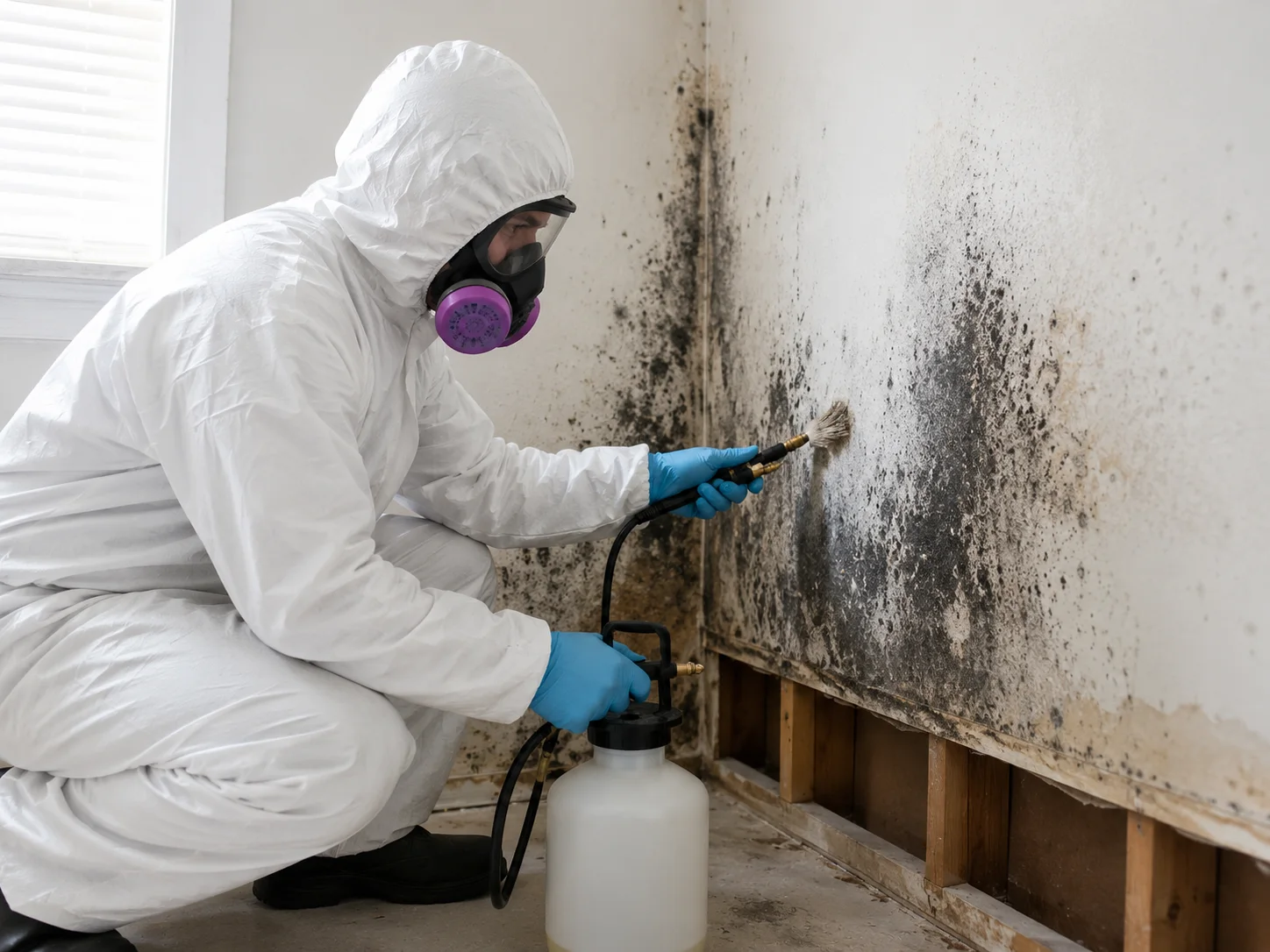
Professional mold remediation in Killeen typically costs $1,500–$3,500 for a common household job. Under Texas law, any affected area of 25 or more contiguous square feet must be handled by a licensed mold remediation contractor, with an independent licensed assessor writing the protocol and performing clearance testing. We find the moisture source, contain and remove the mold safely, and coordinate the required independent testing so the job is documented and passes.
Signs You May Need Mold Remediation
Because we work Killeen and Bell County properties week in and week out, the same warning signs come up again and again:
- A musty, earthy smell that won't go away, even after cleaning
- Visible black, green or white growth on walls, ceilings or grout
- Recent water damage, a roof or plumbing leak, or high indoor humidity
- Peeling paint, warping trim, or discolored, bubbling drywall
- Allergies, coughing or congestion that ease when you leave the house
Central Texas humidity and sudden storms make mold common here — especially after any water damage that wasn't dried properly. Mold and water damage almost always travel together.
Texas Mold Law — What You Need to Know
Texas is one of the few states that regulates mold remediation, and the rules exist to protect homeowners. As a general matter of Texas law:
- Any mold project affecting 25 or more contiguous square feet must be performed by a licensed mold remediation contractor.
- For those jobs, an independent, licensed mold assessor writes the remediation protocol and performs the post-work clearance test — the remediator and the assessor must be separate, independent parties.
- A Certificate of Mold Damage Remediation is issued after completion, which you may need for insurance and when selling your home.
Hiring an unlicensed operator for a large job can void insurance and disclosure protections. Killeen Restoration Co works within these rules and coordinates the required independent assessment and clearance testing so your remediation is properly documented.
Our Mold Remediation Process